
How Much Working Time Does the Team Spend on Meetings?
Meetings help teams stay aligned, make decisions and discuss complex issues. For most organisations, they are an essential part of day-to-day work.
But meetings also represent a significant investment of working time. For example, if seven people attend a one-hour meeting, the company spends seven hours of working time on it. If similar meetings take place regularly, they can account for a substantial share of the team’s overall working time. Without tracking how much time is spent in meetings, it is difficult to assess whether that time is being used effectively.
Why It Is Important to Track Time Spent on Meetings
A large number of meetings does not necessarily indicate a problem. Regular discussions may be essential for some projects, while in others they may point to extensive approval processes or a lack of transparency in how work is organised.
Tracking meeting time separately can help answer questions such as:
— how much working time the team spends in meetings;
— which projects require the most discussion;
— which project managers spend the most time in meetings;
— which departments spend the most time in meetings;
— how this workload changes over time.
Without this data, it can be difficult to determine whether meetings are a necessary part of the work or take up a significant share of the team’s working time.
When to Take a Closer Look at Meetings
Several signs may indicate that it is worth analysing meeting time:
— employees regularly report that they do not have enough time to complete their tasks;
— meetings take place without a clear purpose or agenda;
— issues that could be resolved through comments or documentation are discussed in calls instead;
— one meeting leads to additional meetings to clarify the same issues;
— decisions are delayed because too many approval steps are required.
In many cases, the problem is not the meetings themselves but the way the underlying processes are organised.
How to Reduce the Time Spent on Meetings
To keep meetings useful and focused, organisations can follow a few simple principles:
— define the purpose and expected outcome of each meeting in advance;
— invite only the people whose participation is genuinely necessary;
— use documents, comments and tasks where a discussion is not required;
— regularly review whether recurring meetings are still necessary.
Even small changes can reduce the amount of time spent on communication without affecting the quality of collaboration.
How to Estimate the Cost of Meetings
The simplest approach is to track the time employees spend in meetings.
For example, the cost can be estimated as:
in meetings
cost
meetings
However, understanding the financial cost is often less important than understanding how working time is distributed.
For example:
— how many hours are spent in meetings on a particular project;
— how much time each project manager spends in meetings;
— what proportion of the team’s total working time is spent in meetings;
— which departments spend the most time in meetings.
This data helps identify processes that may need to be optimised and supports decisions based on actual data rather than assumptions.
How Can Weenvo Help?
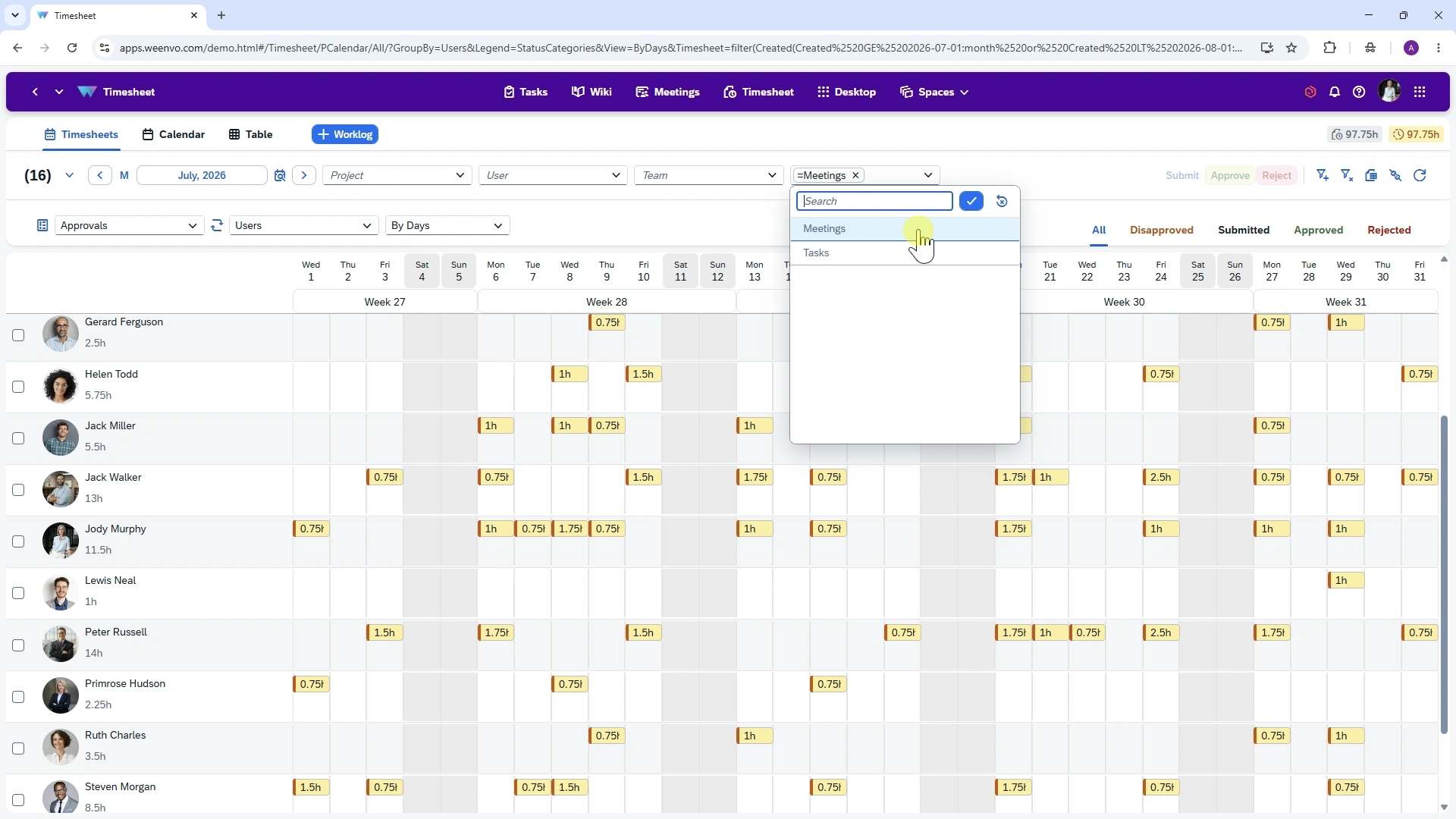
In the Timesheet section, Weenvo allows teams to analyse time spent on meetings. When employees log time for meetings, the system shows how much working time was spent on them.
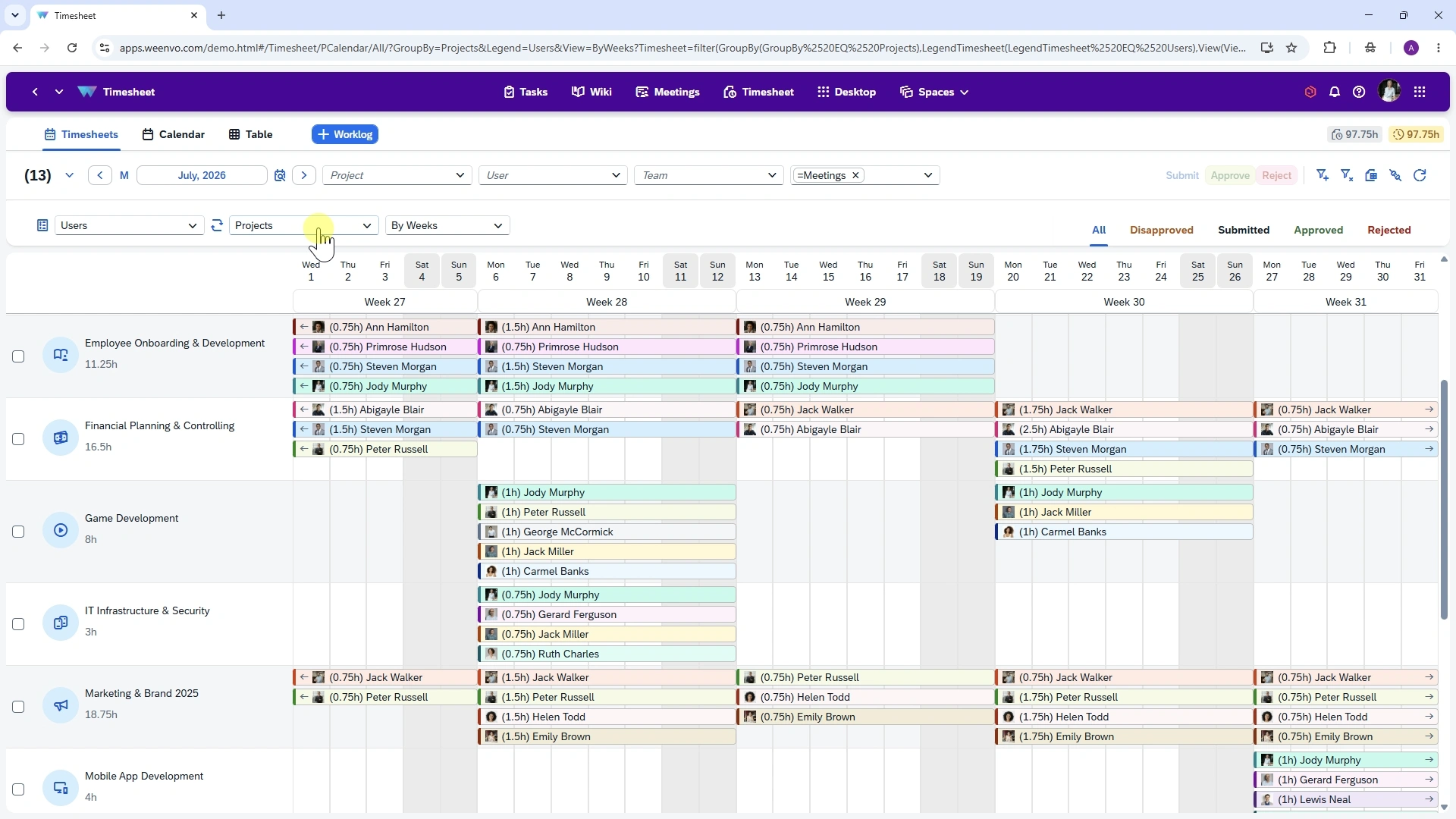
Grouping by project helps identify which projects require the most discussion, compare meeting time across projects and assess how resources are distributed.
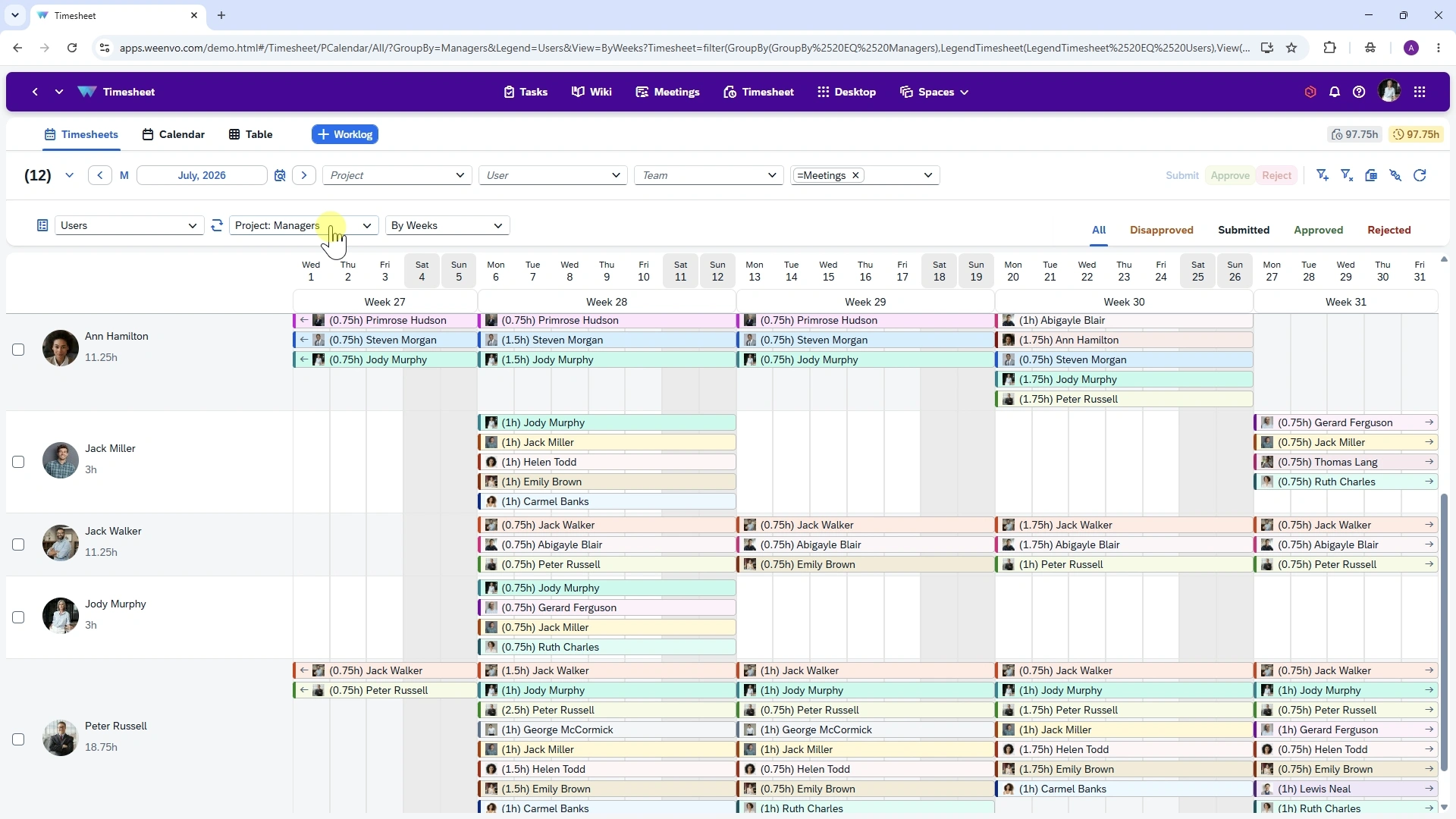
Grouping by project manager helps show how much time is spent in meetings across projects managed by each project manager and identify which projects require the most discussion.
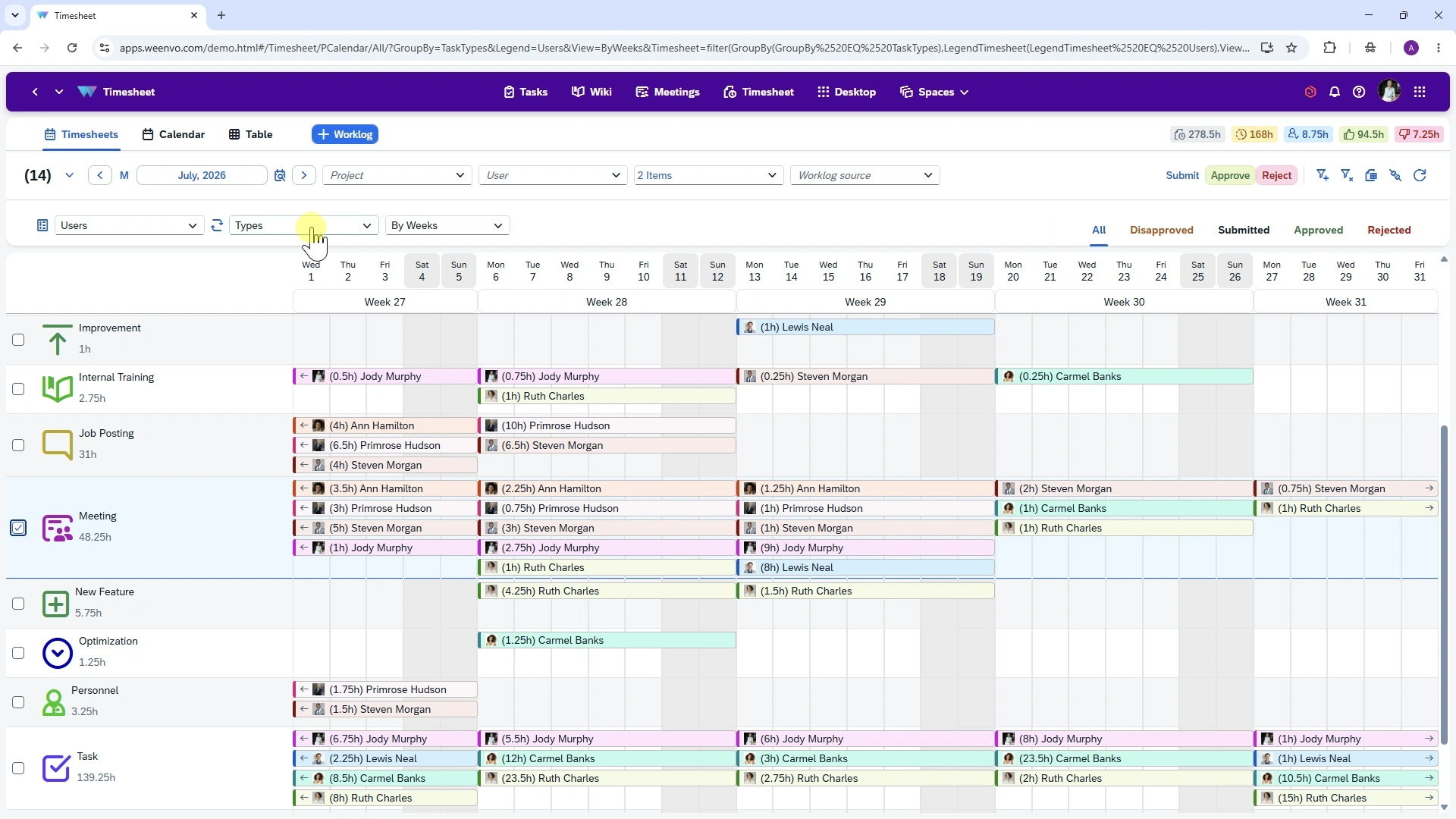
Meetings can also be tracked as a separate task type if this approach is used within the organisation. In this case, the recorded time is also available for analysis in the Timesheet. To do this, select grouping by task type and choose the required time period: month, week or day.
Analysing time spent on meetings helps organisations understand how communication affects the way teams work. With Weenvo, this data can help identify unnecessary approval steps, optimise workflows and free up time for work that matters most.
Try the Weenvo demo or start for free.